Timeout and Deadline Propagation Failures in Long-Running Agent Tasks
Tools need explicit time budgets and cancellation signals that models cannot enforce alone.
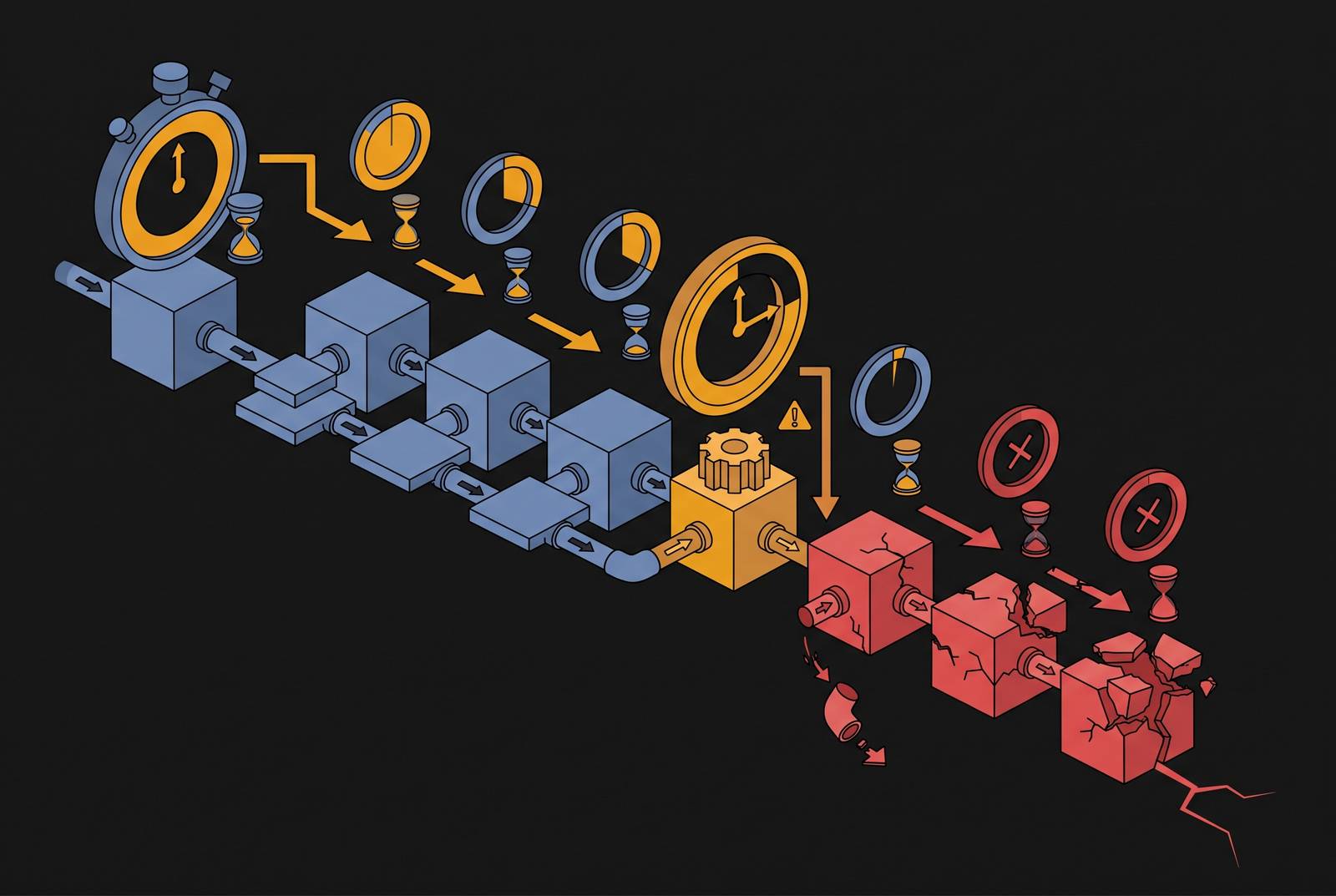
Timeout and deadline propagation failures in long-running agent tasks are fundamentally harness engineering problems. Missing time budgets, absent cancellation signals, and uncontrolled retries leave agents operating without the constraints their tasks require. The remedy is to trace where time context breaks down, repair that layer, and validate the change against the production failure that exposed it.
Why timeout failures in long-running agents are misdiagnosed as model failures
An engineer sees a long-running task time out and reaches for a bigger model or a longer context window. That response treats the final symptom as evidence about the model’s capability. Yet the model may never have received the remaining-time information needed to change its behavior. A larger model cannot recover a budget that orchestration never supplied, and a longer context window does not enforce a deadline. Before blaming the model’s capability, an engineer must check the execution path to see what information and controls were there.
Sehgal et al. at the University of Pennsylvania demonstrate this distinction in strategic dialogues. Agents without explicit time-remaining signals close only 4% of deals, while the same agents close 95% or higher under turn-based limits. The contrast locates the difficulty in temporal tracking. This shows how the conditions around the model can make it seem unable to finish, though it does not prove that every timeout is a harness fault.
Scale AI’s interaction-centric taxonomy explains why the visible outcome alone cannot assign responsibility. An agent whose harness removed an instruction during context compaction can produce the same output as an agent that received the instruction and ignored it. Only the former calls for a harness repair. To diagnose a timeout, an engineer must likewise check whether information never arrived or the model failed to use it.
What the harness controls that the model cannot
The harness is the loop around the model that turns single completions into long-running work. It has the system prompt, tool registry, memory and compaction rules, and orchestration logic that decides how tools are used. Context management controls whether the model can still see time information, while orchestration and tool dispatch set the budgets for the work. Cancellation signals control whether that work stops when its parent expires.
To do these jobs, the harness needs separate controls for a step-level limit, a per-tool timeout, and a whole-task deadline. These limits constrain different scopes of work and cannot stand in for one another. If a task has a ten-second total budget and retrieval consumes three seconds, downstream steps must inherit only the remaining seven. That arithmetic belongs to orchestration because the model cannot independently infer elapsed execution time. A configured tool timeout is therefore not a substitute for the parent’s remaining budget.
Scale AI’s taxonomy also limits how broadly harness responsibility should be interpreted. It classifies external timeouts as environment-side failures and failure to adapt after a tool call fails as a model-side ‘Tool Recovery Failure’. The harness governs context, memory, and tool access, but that does not make every unsuccessful interaction its fault. Assessing harness responsibility requires checking whether it supplied and enforced the constraints required at the boundary it controls.
The three harness gaps that actually cause timeout failures
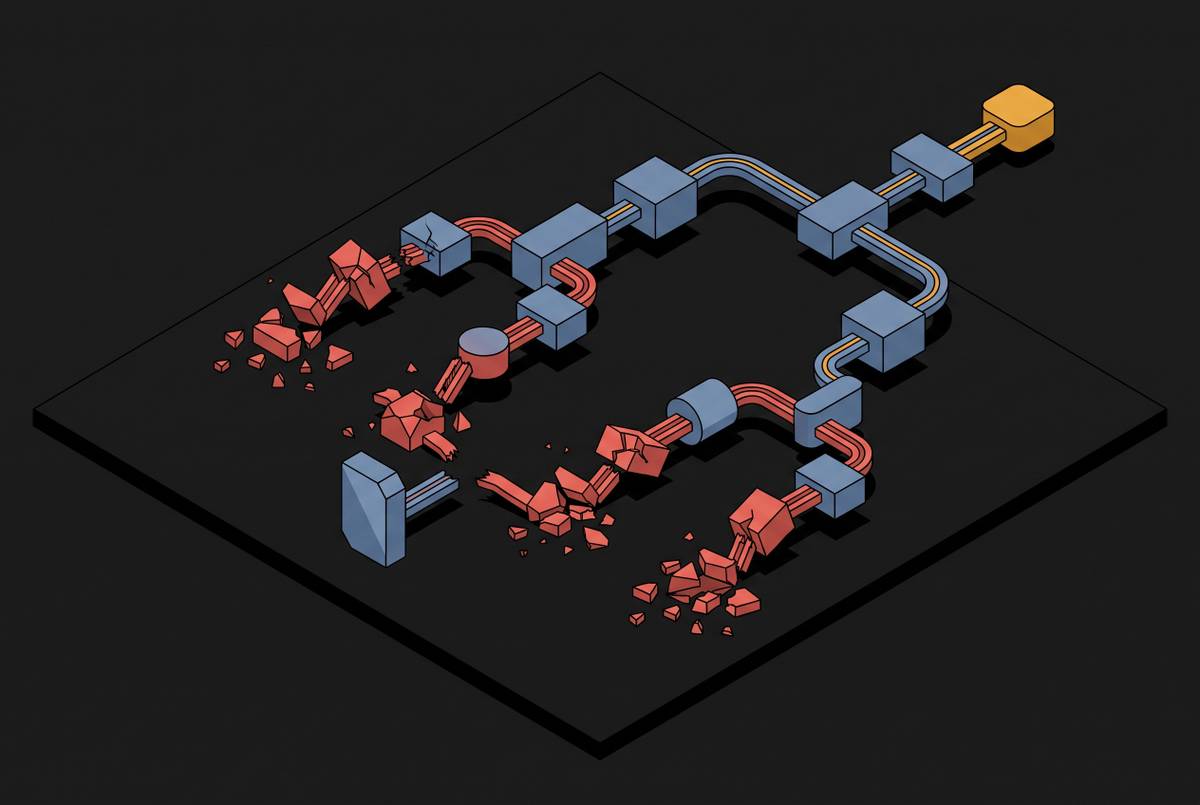
The first gap is missing time budget propagation. A deadline at the request boundary does not reach nested tool calls, sub-agents, or async jobs on its own. Without explicit propagation, a child call may run for its full configured timeout after the parent request has expired, consuming tokens, workers, and compute without contributing to a response. Correct orchestration computes remaining time after every step and passes it downstream as the child’s budget ceiling.
The second gap is absent or ignored cancellation signals. When a parent deadline expires, queued work, tool runners, and async jobs continue unless cancellation is both propagated and honored. A signal recorded only at the request boundary cannot stop those children. The harness must send cancellation to each worker and act on failure states, without assuming that work is useful just because no errors appear. A tool returning HTTP 200 with an empty payload illustrates the danger of that assumption, because an error-code-only cancellation path never fires.
The third gap is an unmonitored retry loop without an orchestrator-enforced exit condition. Without that condition, an agent can reissue the same tool call indefinitely, consuming its time allocation and filling the context window with failed attempts. Earlier reasoning is pushed out of scope, so the eventual timeout can arrive after the original task has lost its coherent record in context. Correct orchestration enforces explicit retry limits and accounts for every attempt against the remaining deadline.
Why multi-step and multi-agent architectures make these gaps compounding
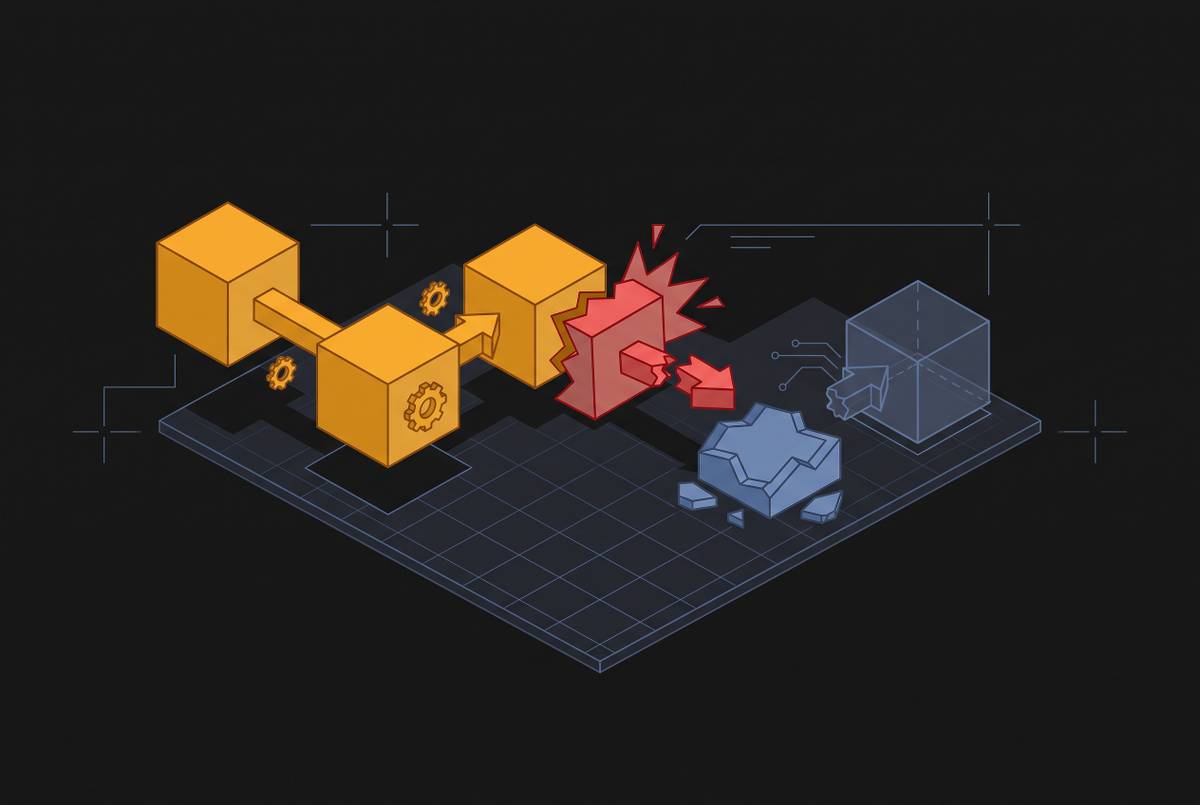
In a multi-step system, a missing constraint affects more than the call where it first disappears. A malformed or hallucinated output passed downstream becomes corrupted input for later reasoning. If a subsequent agent detects the problem, its attempt at self-correction may issue new tool calls. Those calls can fail and lead to more retries, which add latency and token cost before a human gets the final result.
Each iteration occupies window space, while tool definitions add their schemas, names, descriptions, and parameters at every call. A large tool registry accelerates exhaustion under retry conditions. As the history grows, the agent has less room for the earlier reasoning that established the task and its constraints. The system is spending more time while preserving less of the information needed to use that time well.
Scale AI’s taxonomy treats failure propagation across agents as a problem in how the system is built that must be traced at the interaction edge. A visible failure can originate in the harness of either the calling agent or the called agent. So checking each agent on its own cannot show where the shared execution path broke down. Compounding makes the outcome worse, but it also separates the place where an error becomes visible from the place where responsibility belongs.
What instrumentation can actually attribute a timeout to its harness layer
Infrastructure dashboards commonly report uptime, latency, error rates, and status codes. Those measures can show that a request took too long without explaining why its deadline became unenforceable. They also miss a tool call that returns HTTP 200 but supplies no useful content. For that failure class, the diagnostic signal lies in the execution trace and in the output’s relationship to the original intent. Request-level latency alone cannot reveal which handoff lost the time budget.
The minimum useful trace records which tool was called, the parameters passed, and the result returned. It also records the remaining budget at the moment of the call and how that budget compared with the tool’s configured timeout. Step-level timestamps and budget snapshots make the handoffs reconstructable. Without them, a team cannot tell whether a child call had a real chance to finish before its parent expired. Output validation also helps show whether the work produced something useful or just an empty success response.
Scale AI’s interaction-centric taxonomy provides an attribution method for that evidence. It assigns the failure to the interaction edge where it originates, including harness-to-tool, tool-to-model, or harness-to-context, and then identifies the fault side. This points to scaffolding or tool-integration changes as the fix for a harness-side fault, with no need for model post-training. AgentDebugX’s Attribute component, described by Zhu et al., 2026, likewise locates root causes rather than only flagging the step where an error surfaced. For timeouts, that distinction prevents the terminal deadline event from concealing a much earlier propagation gap.
How to close the gap without letting failures compound
For propagation, compute the remaining budget after every orchestration step and pass it explicitly to every child call as its ceiling. Treat remaining time as a required parameter in tool signatures and sub-agent handoffs. Merely telling the model that the overall task has a deadline does not provide this control.
The Pennsylvania study shows both the value and the limits of supplying time information to the model. Remaining-time updates under real-time deadlines raise deal closure to ~32%, but the improvement is fragile and model-dependent. Performance is near-perfect under turn-based limits, which change the execution constraint while keeping the model the same. Temporal information and enforceable runtime controls are distinct parts of the harness.
For cancellation, propagate tokens to every child worker, queue consumer, and async job when the parent deadline expires. Design for partial completion so cancellation returns partial results, cached context, or a narrower answer. This gives the user a signal and leaves the trace with a record of what completed. Silent tool failures also call for checks that the output content matches the expected schema. Waiting for an error code leaves an empty successful response outside the failure-handling path.
For retries, enforce one to two retries with a clearly defined per-retry budget drawn from the remaining deadline allocation. The orchestrator should detect repeated calls with similar parameters and similar null outputs as a loop signature, then fire cancellation. Prefer fewer, more expressive tools to large registries so tool definitions consume less context during repeated calls. LIFE-HARNESS (2026) shows that changing the runtime interface between a frozen model and its environment can make it perform meaningfully better while keeping model weights the same. These controls belong in the same review and testing process as other production changes.
Validating harness changes against production traces before shipping
A harness change that appears correct in isolation can still leave the original timeout gap open. It can also introduce regressions in adjacent task types. Validation must therefore return to the production traces that established the failure, rather than judge the repair only by its intended design.
Replay needs recorded tool outputs and sandboxed side effects to keep tests stable and cheap. Dependence on live APIs can produce different results during re-execution, weakening the comparison between the failed trajectory and the proposed repair. Golden tasks should then be tiered around the actual failure modes. Smoke tests cover basic propagation correctness, core tests cover retry-loop exit conditions, and torture tests cover cascading multi-agent deadline scenarios drawn from production traces. These tiers connect validation scope to the ways the harness can fail.
AgentDebugX’s Rerun component, described by Zhu et al., 2026, demonstrates the closed-loop approach. After attribution and a proposed fix, it regenerates the trajectory around the failure point to test whether recovery improves agent behavior. That is a stronger criterion than a final output that merely looks better, because it examines the behavior the repair was meant to change. The production trace first identifies where the time context broke, then supplies the conditions against which the correction is tested. A timeout repair is complete when that evidence supports both the attribution and the fix.