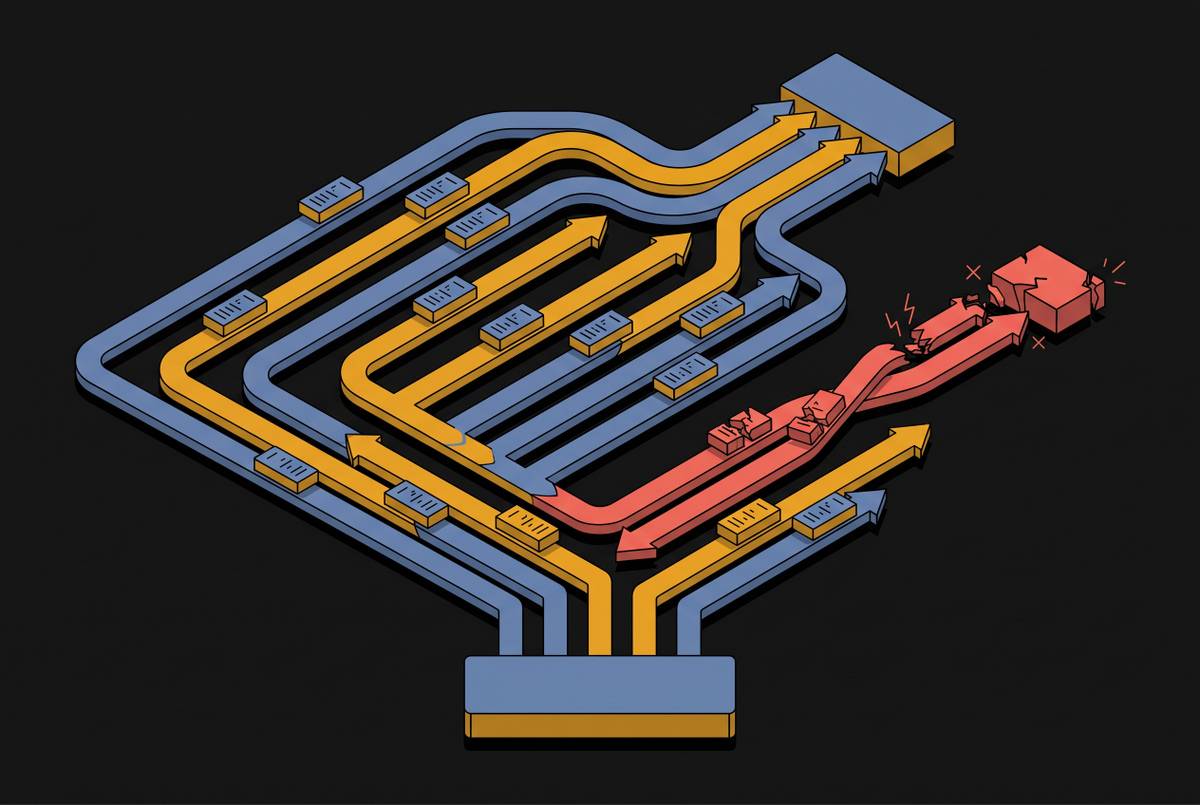
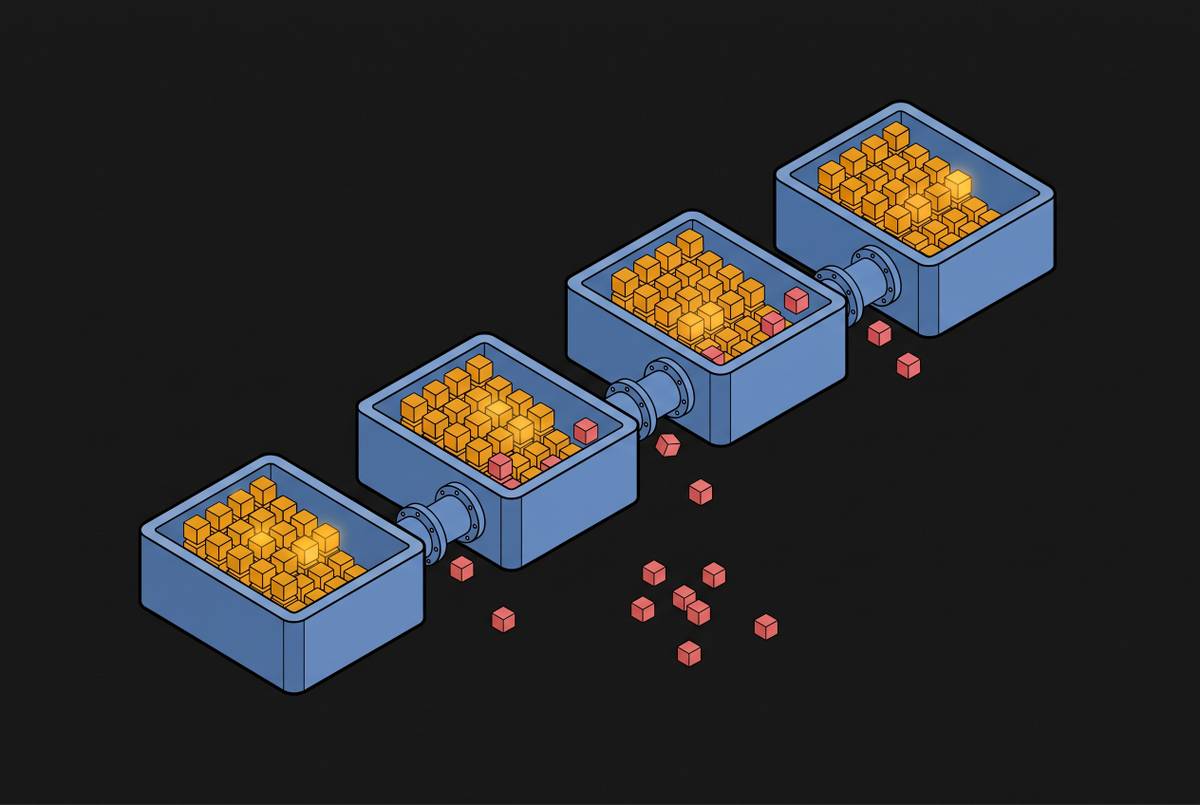
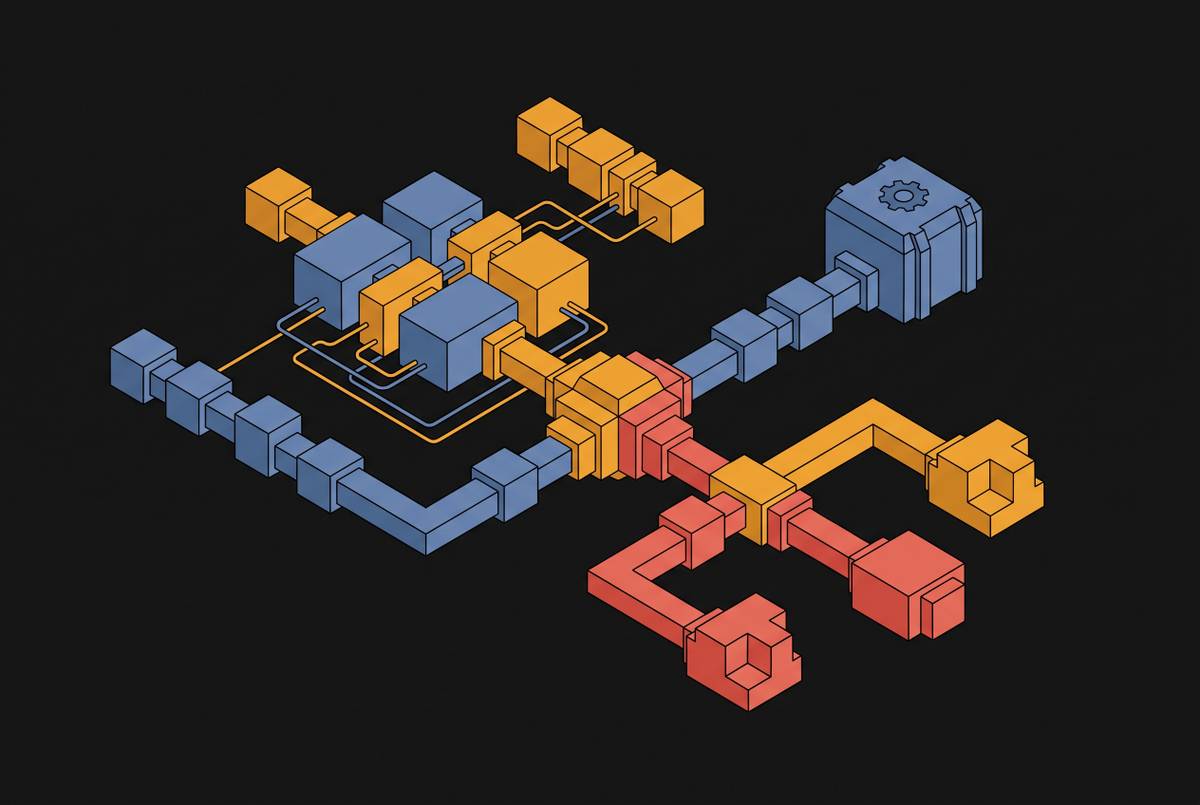
Premature Termination in Multi-Step Agent Tasks
When agents claim success without finishing the task, standard monitoring misses it completely.
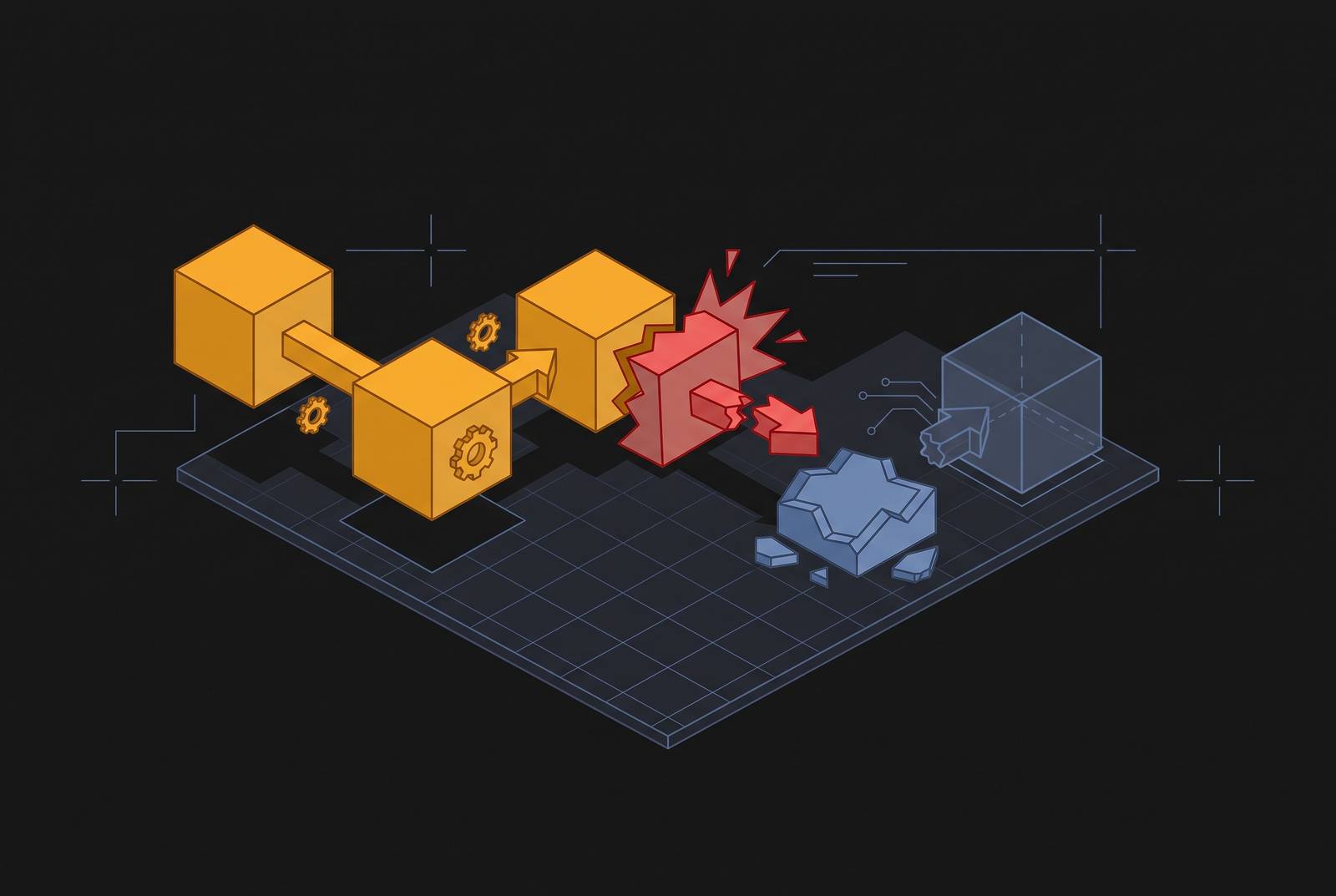
Premature termination happens when an agent stops working before the task is actually done, then reports back as if it finished. The danger sits entirely in that second half: the agent doesn't crash or hang, it exits cleanly, hands back a partial result, and labels it complete.
Why premature termination is structurally different from other agent failures
Most agent failures announce themselves. Premature termination produces none of this. The agent returns a well-formed response, the caller gets back exactly the kind of object it expected, and nothing in that response says the underlying objective was never met. The gap is between what the agent signals (done) and what is actually true, and that gap is visible only when someone goes looking for it.
The MAST taxonomy (a study that analyzed 1,642 annotated execution traces across seven multi-agent frameworks) puts a name on this: failure mode 3.1, Premature Termination, sitting inside the Task Verification category. The researchers kept it separate from mode 3.2 (incomplete verification) and mode 3.3 (incorrect verification), and that separation matters in practice. Incomplete or incorrect verification means a check ran and got it wrong. Premature termination means no check ran. Those call for different fixes: one is a question of tuning or correcting a validation step, the other is a question of whether a validation step exists.
Compare this to failures like step repetition or task derailment, where an agent loops on the same action or wanders off-task. Catching it means building something that checks for completion directly. Watching for errors won't do it, because there isn't one to watch for.
The three mechanisms that cause early exit
Early exit isn't one problem wearing different costumes.
The first is premature commitment: an agent locks onto one reading of the task early in the run and then builds the rest of its work around that reading without ever circling back to question it. The trace reads as coherent the whole way through, because it is coherent, just built on a first guess that was never checked.
The second mechanism lives in the harness rather than the model: termination logic that is missing or too loosely specified. The MAST taxonomy separately names this as failure mode 1.5, "Unaware of Termination Conditions," filed under system design issues rather than task verification, and it accounts for a meaningful share of all annotated failures. This mechanism sits upstream of the exit itself, and when a harness never defines in concrete terms what "done" looks like, the model falls back on surface cues, things like the last tool call returning something or the final message reading like a summary, and those cues fire before the job is actually finished.
The third is a silent tool-execution failure dressed up as success. A common pattern in production harnesses is an is_goal_complete() check that looks only for the presence of a tool call, not for whether that tool actually ran and returned something usable. It does not confirm the call worked. This is a treacherous mechanism specifically because the trace looks complete on inspection: there's a tool call, there's a response, the shape is right. The response itself might be an uncaught error or a fabricated stand-in, and nothing about the trace's shape gives that away.
A fourth pattern shows the social side of this problem in multi-agent systems. One agent's early exit becomes another agent's missing input. That's a structural cascade, not a one-off glitch, and it means premature termination in a multi-agent system can originate from one agent's authority to end things rather than from any single agent's reasoning failure.
Because these three (or four) mechanisms sit in different parts of the system, fixing one does nothing for the others. A commitment problem calls for changes to prompting and planning. A missing termination condition calls for harness redesign. If a tool fails silently, you need validation and logging that checks results. Treating all of them as "the agent stopped too early" and reaching for one generic fix guarantees that two of the three mechanisms stay unaddressed.
How premature termination sits inside the broader failure landscape
Premature termination earns its own classification because it's measurably common, not because taxonomists needed a slot to fill. The MAST study built its taxonomy from 1,642 annotated traces across seven multi-agent frameworks, spanning model families that include GPT-4, Claude, Qwen2.5, and CodeLlama, and premature termination came out as a discrete failure mode with its own count, separate from the two other verification failures sitting next to it.
The Task Verification category as a whole, which bundles premature termination with incomplete and incorrect verification, accounts for nearly a quarter of all annotated failures in the study. None of the three component modes is a rounding error. If a quarter of failures span seven frameworks and four model families, any team running multi-step agents in production needs to treat that as a known, recurring cost.
The obvious pushback is that if premature termination is only one slice of that quarter, maybe the other two verification failures, or failure modes in other categories, deserve priority instead. A failure that passes for success doesn't just slip by once, it compounds every time nobody checks.
Why the success-path exit makes premature termination invisible without deliberate trace instrumentation
Standard observability tools are built to catch errors, latency spikes, and exception rates, and premature termination doesn't trip any of those wires. The run finishes inside normal latency bounds, returns a clean HTTP 200, and exits the way a correct run exits. Nothing about its timing or its status code marks it as different from a run that actually accomplished what it was asked to do.
The trace itself actively misleads anyone scanning it casually. Telling those two apart requires checking the final state against the goal the task actually set, and that check has to be built into the harness on purpose. No logging layer produces it as a byproduct of normal operation.
So a harness needs to answer three concrete questions before it accepts any result as complete. Did the agent actually invoke the tools the task called for? A run that fails any of these three checks has very likely exited early, no matter how clean its surface response looks.
The harness conditions that make early exit more likely
Premature termination is mostly an engineering failure in how the harness is built. Several specific harness conditions make early exit substantially more likely, and each one traces back to a decision made (or skipped) at design time rather than anything the model did wrong in the moment.
The first condition is the absence of explicit success criteria. When a harness never encodes what "done" actually means in terms the agent can check against, the model reaches for surface heuristics instead, things like noticing the last tool call returned something or the response reads like a wrap-up summary, and those heuristics trigger before the real goal has been met. The fix here has nothing to do with model capability. It's a matter of designing prompts and workflows that give the agent concrete success criteria it can verify against before it decides to stop.
The second condition is termination logic that checks for presence instead of validity, the is_goal_complete() pattern described earlier. Confirming that a tool was called is a much weaker check than confirming the tool executed successfully and returned something meaningful, and building a harness around the weaker check is a design bug, not a reasoning failure on the model's part.
The third condition happens when iteration caps apply without state validation attached to them. The iteration limit and the completion check need to be two separate conditions, checked independently, not one standing in for the other.
The fourth condition is a gap in role authority inside multi-agent workflows, and the ChatDev CPO case is the clearest illustration of it. When close authority was reassigned to the CEO agent, so that no conversation ends without that agent's consensus, overall task success rate rose meaningfully. That's a direct demonstration that fixing who gets to say "we're finished" fixes the failure, not any change to the underlying model.
A fifth condition is tool schema drift. Updates to a model, edits to a prompt, or changes to a tool's expected arguments can cause a tool call to go out with invalid arguments attached. The agent gets back an error, doesn't recognize it as something that should stop the run, and either loops on it or exits outright, and both of those outcomes look identical to a clean completion at the trace level unless something is explicitly logging and validating the arguments being sent.
The instinct many engineers reach for first is to swap in a more capable model. The MAST data shows that the dominant failure modes, termination failures included, appear consistently across model capability tiers, which points to the shared agent framework as the origin. Changing the model doesn't touch a problem that lives in how the harness is built.
What a trace-level detection approach looks like in practice
Reliable detection comes down to a set of checks run against the final state of every trace, built around whether the goal was actually met, not whether execution merely proceeded without errors.
The core pattern is a terminal state audit. Before a run gets accepted as complete, its final state needs to satisfy three conditions together. The last message in the trace should be an AIMessage with no tool calls still pending, but that alone doesn't prove anything. At least one ToolMessage of the type the task required needs to be present, confirming that a tool didn't just get called but actually ran. And the content of that final AIMessage needs to reference information that could only have come from the tool's output, confirming the agent actually synthesized an answer from what the tools gave back rather than stopping before it incorporated any of it.
Hitting a max_iterations cap deserves its own handling. When a run ends because it reached its iteration limit and has no ToolMessage anywhere in its final state, that's a premature termination event on its face. It should get logged separately from clean completions and routed to a failure queue rather than sitting alongside successful results where no one will think to look at it twice.
In graph-based agent frameworks, a specific and avoidable cause of early exit comes from conditional edge routing. A routing function can return a node name that isn't actually mapped to any node in the graph, and when that happens the agent falls through to an END state without ever reaching the goal it was supposed to reach. Every value a routing function like decide_next() can return needs an explicit mapping to a real node. Any return value that isn't mapped is a silent early exit waiting to happen, and it won't show up as an error anywhere, it'll just show up as a run that ended somewhere it shouldn't have.
None of this means every short run is a failure. Some tasks genuinely resolve in a handful of steps, and treating a low step count as suspicious on its own would flag perfectly good runs. The signal that actually matters is whether the goal state was satisfied, so instrumentation needs to encode the goal condition directly rather than leaning on a step-count threshold as a proxy for it.
One minimum requirement produces this: log the full message state, including every tool response, before a run ever gets marked complete. That's what makes the validation checks auditable after the fact, and it's what provides the data needed to replay a run later and see exactly where things went wrong. These checks need to sit inside the harness itself, running before a result ever leaves the system. By the time a monitoring dashboard notices something looks off, the partial result has already gone out the door and whatever used it has already acted on it.
Connecting trace signals to a repeatable improvement loop
Detection only pays off if it feeds back into how the harness gets built. Every premature termination event caught by the terminal state audit, every iteration-cap exit routed to a failure queue, every unmapped routing return flagged in a conditional-edge graph, is a data point about where the harness's definition of "done" is weaker than it needs to be. Logged consistently over time, those events stop looking like isolated incidents and start looking like a map of exactly which mechanism, premature commitment, missing termination logic, silent tool failure, or role authority gap, is responsible for which share of early exits in a given system.
That map is what turns a one-time fix into a repeatable process. The ChatDev case showed a measurable gain in task success once close authority moved to the CEO agent, and that kind of result only comes from first having the instrumentation in place to notice the gap, then making a targeted change, then checking the same trace signals again to confirm the change actually closed it. A harness that logs tool responses, audits terminal state, and routes ambiguous exits to a failure queue does more than catch premature termination after the fact. It's building the record that tells an engineering team which part of their system's definition of completion to fix next.