Handoff Failures in Multi-Agent Orchestration Pipelines
Coordination failures in multi-agent systems hide in handoffs between agents, not inside them.
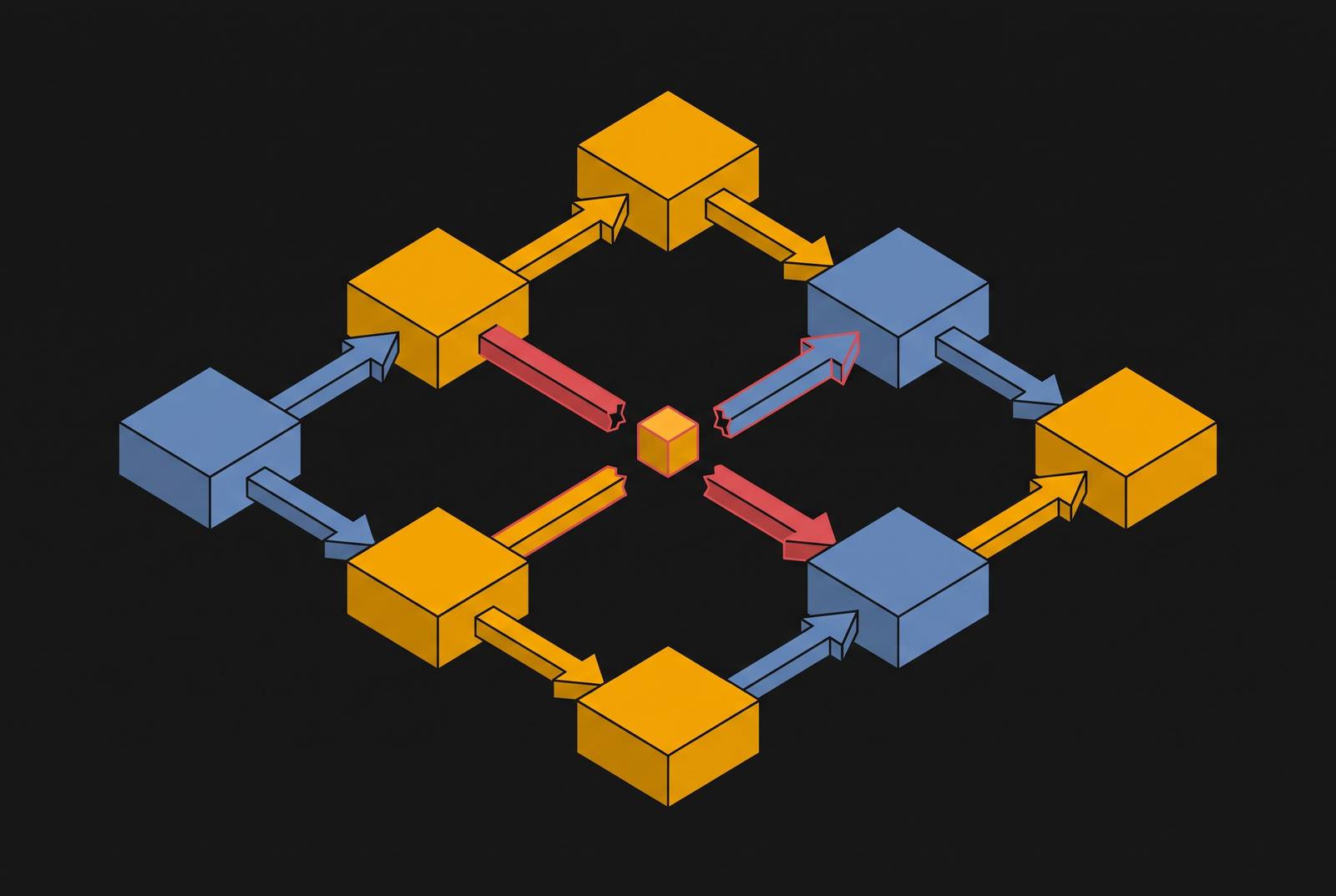
A single agent that fails leaves a mark. The wrong answer comes back, a tool call errors out, a timeout fires, and there is one call stack to open and one prompt to inspect. Multi-agent systems break differently: a pipeline can fail while every agent inside it reports success. The planner finishes. The researcher finishes. The writer finishes. But the output that reaches the user is wrong anyway, because the orchestration layer connecting those three agents degraded somewhere in between, silently, and no single agent threw an error. By the time anyone notices the workflow broke, the trace has gone cold, so you find the cause spread across five spans belonging to three different agents, and none of them looks broken on its own. That is a failure of coordination, and the fix has to live somewhere other than inside the model.
The three structural categories that account for almost all multi-agent coordination failures
Researchers studying multi-agent failure at scale have organized what goes wrong into a taxonomy known as MAST, which sorts nearly all observed failures into three root categories: specification issues, inter-agent misalignment, and task verification. Each category points to a different layer of the system, and each one will likely be familiar to anyone who has run agents in production even without having had a name for it.
Specification ambiguity is the most common of the three, and the easiest to misdiagnose. It happens when two agents hold inconsistent interpretations of a shared task or shared context. Neither agent is wrong, given what it was told. The gap lives in the handoff between them, in the space where one agent's understanding of the task should have transferred cleanly to the next agent and did not. So the output looks confidently wrong, no individual span shows an error, and you read the whole thing as a model quality problem until you inspect the boundary where the two agents actually met.
Coordination breakdowns are the second category, and they are timing-dependent in a way that makes them nearly invisible before launch. They appear when one agent assumes state that another agent has not yet written, or when a message gets dropped and no agent retries it. Because these failures depend on timing and load, they often do not appear in a pre-production test suite. They become visible once the system is handling production traffic, or once a dependency slows down just enough to break an assumption nobody wrote down.
Verification gaps round out the taxonomy, and they tend to look like output quality problems when they are really coordination pattern problems. In a lot of multi-agent pipelines, no single agent has been explicitly assigned the job of checking another agent's work across the handoff. Verification becomes everyone's job in theory and nobody's job in practice. None of these three categories cancels out the others: a well-designed architecture with no communication protocol will still produce misalignment failures, and a correct protocol with no verification step will still let task-verification failures through. Each layer needs its own fix.
The specific mechanisms through which handoffs break: loops, role overlap, schema drift, and context overflow
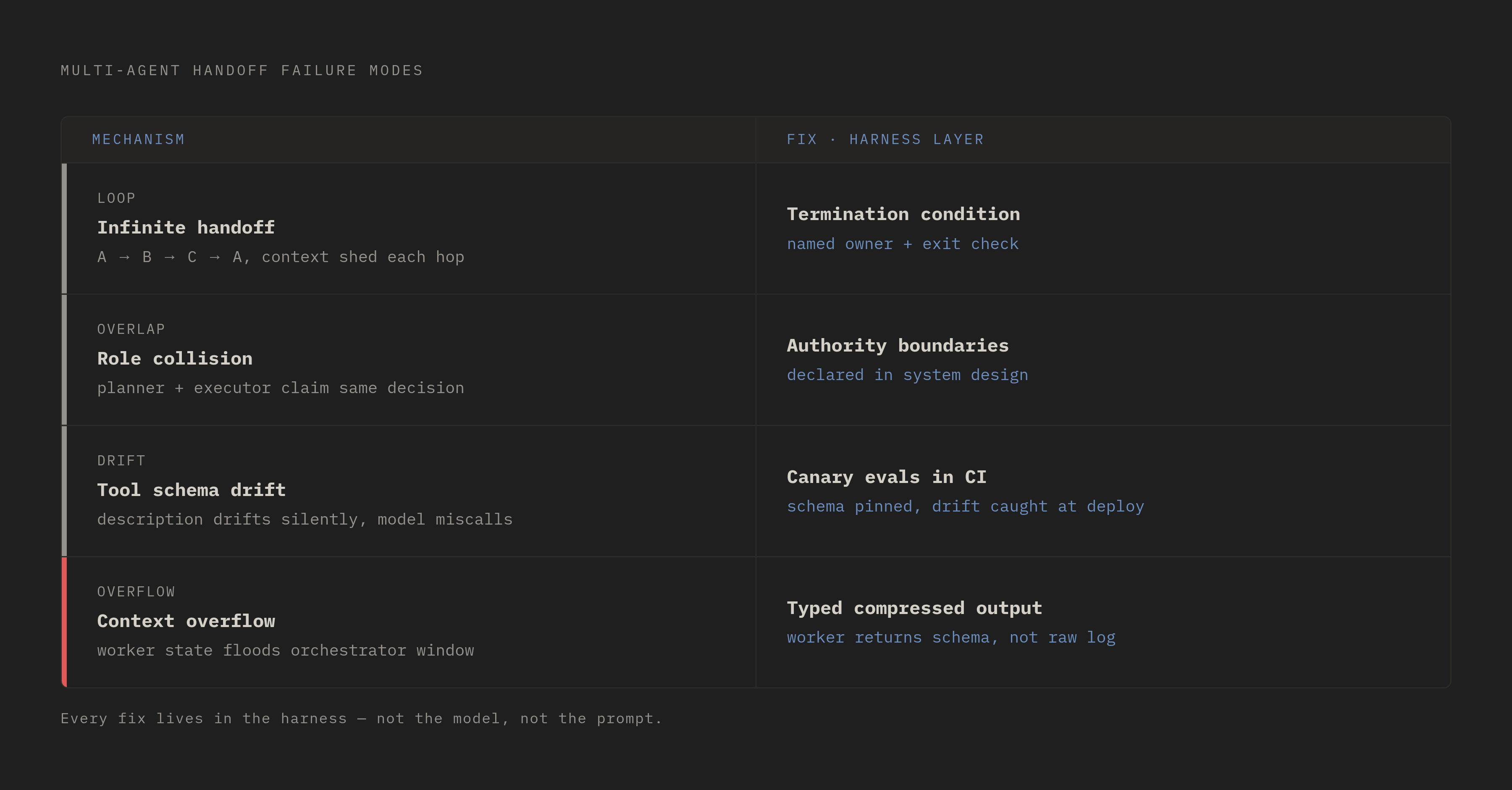
Four mechanisms account for most of what actually goes wrong at the handoff layer.
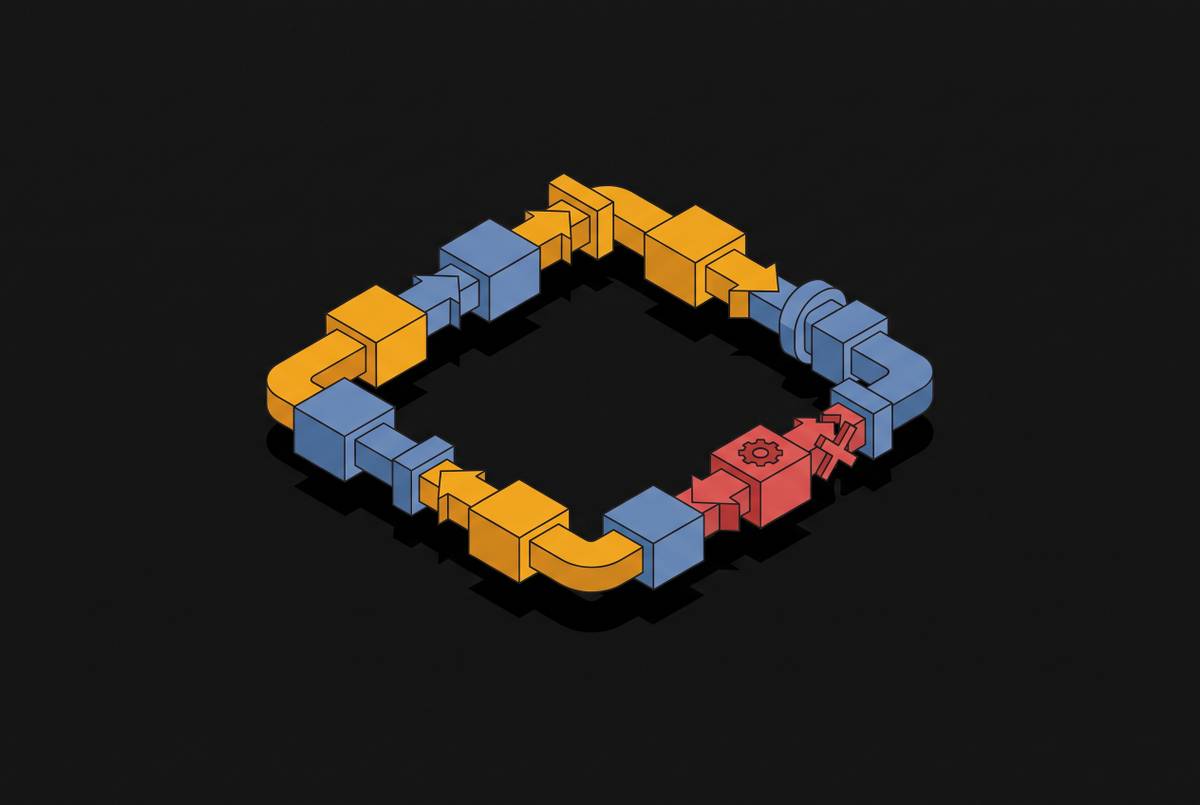
Infinite handoff loops happen in dynamic handoff architectures that were never given a way to stop. Agent A passes work to B, B passes it to C, C passes it back to A, and each agent keeps replanning because no single agent owns the task and no exit condition was written into the coordination specification. Every transfer loses a little more context, so the longer the loop runs, the further each agent drifts from what the task originally asked for.
Role overlap comes from prompt-level authority boundaries that sound clear but are not. Two agents can each believe they own the same decision: the planner thinks it is dispatching work, the executor thinks it is deciding what to do next, and the result is duplicate work at best and contradictory actions at worst. Telling the planner to plan and the executor to execute does not fix this, because neither agent is behaving incorrectly on its own terms. The system handed both of them authority over the same piece of the task, and no amount of prompt language resolves a conflict that was built into the architecture.
Tool schema drift is probably the most common silent failure in production multi-agent systems, and it is the quietest. A tool changes without its registration changing to match. If the schema itself breaks, the mismatch throws a runtime error that someone will see. If only the description drifts, there's no error at all: the model simply starts calling the tool in situations where it shouldn't, or stops calling it where it should, and nothing in the system flags the change. A closely related failure happens when an upstream agent hands off a summary instead of structured state, and the downstream agent then has to work from an impoverished, sometimes misread, version of the task.
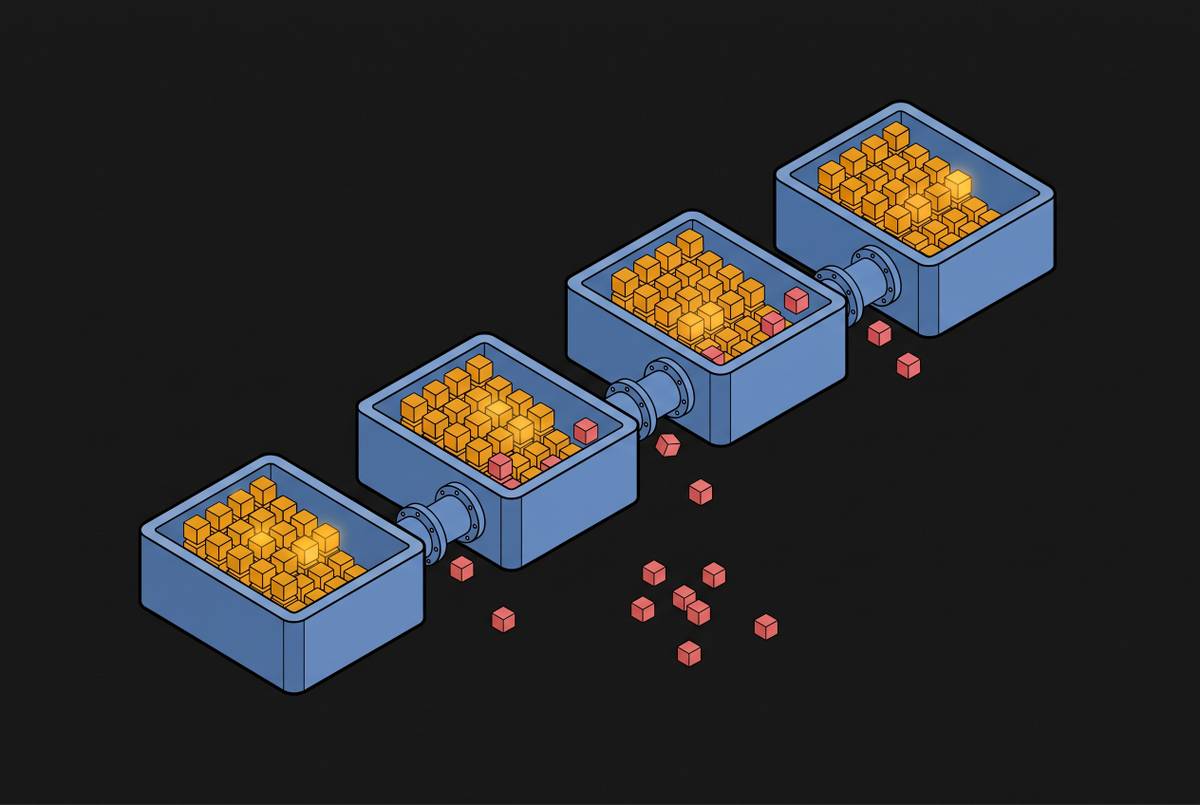
Orchestrator context overflow is a structural limit, not a model limitation. As the number of worker agents grows, the orchestrator accumulates more and more state from each one, and if nothing in the architecture compresses or offloads that state, the orchestrator eventually runs out of room to hold it. Three recurring gaps in how agents get specified in the first place produce several of these mechanisms: no exit condition, which lets an agent loop or drift indefinitely; no fallback handling, which causes an agent to halt the moment a tool call fails; and no format specification, which produces output that is technically correct but unreadable by whichever agent receives it next.
The coordination harness as the right intervention surface for all four failure types
Every mechanism described above traces back to the same place: the specification, the state contract, or the context-passing logic that sits between agents, none of which is part of the model itself. That layer has a name in recent research: the harness, and a formal description of how fragile it can be. Work on Harness Continual Learning (HCL) shows that updating the harness can disrupt previously reliable behavior even when the model underneath stays completely frozen. A memory update can change what evidence gets retrieved for a query that used to work fine. A skill revision can alter how a tool gets used. A routing edit can quietly break a workflow that had been running correctly for months. These components are coupled to each other in execution. A fix or a regression in one can ripple into behavior that looks, from the outside, like the model got worse.
The same coupling runs in the useful direction too. Tightening a state contract, adding an exit condition, or restructuring a handoff payload can eliminate an entire class of failures. A structured protocol called SEMAP (Software Engineering Multi-Agent Protocol) builds this principle directly into its architecture: it models the task lifecycle as a finite state machine, enforces explicit behavioral contracts between agents, structures the messages agents send each other, and guides execution with built-in verification at each stage. SEMAP itself locates the cause of failure in multi-agent systems in under-specification and coordination misalignment, not in any limitation of the models doing the work.
Most of the industry has spent its effort patching these structural problems at the prompt layer instead: better role instructions, a line telling the agent to "verify before returning," another telling it not to loop. The failure rates MAST documents are what happens when a prompt-layer patch gets asked to carry weight that only a structural fix can hold. Retraining a model or swapping it for a newer one will not close a gap that lives in the coordination layer between agents. That gap is a design problem, and it needs a design fix.
Harness engineering for handoff reliability in practice
Each of the four mechanisms above has a specific fix, and each fix belongs at a specific layer of the harness.
Infinite loops get closed by architectural constraints, not by asking an agent to behave better. The workflow specification needs an explicit termination condition, a named owner assigned to each task at the moment of handoff, and a maximum number of hops, enforced by the orchestration layer itself, not left to the agents to self-regulate.
You close role overlap by defining authority boundaries in the system design before any agent is written. Role overlap, missing escalation paths, and scope ambiguity between agents are all system design failures. Their fix lives in architecture, not in prompt engineering.
You catch tool schema drift with canary evaluations that exercise the full call-and-response cycle for every tool, so you need at least one eval prompt per tool, run in CI before any change reaches production. The description attached to a tool is part of the contract the model acts on, and it needs to be versioned and validated the same way any other interface contract would be.
Context overflow in orchestrator-worker systems gets fixed with an explicit compression or offloading strategy: workers return structured, typed output instead of free-text summaries, and the boundary between orchestrator and worker enforces context limits directly rather than relying on the model's context window to catch overflow as an afterthought.
The three structural prompt gaps named earlier each map to a specific fix as well. Exit conditions belong in the workflow specification. Fallback handling belongs in how a tool gets registered. Format specification belongs in the schema of the handoff payload itself. And the clearest version of this discipline is the typed handoff payload: instead of a planner handing an executor a paragraph of prose summarizing what to do, it hands over a structured object with explicit fields, a task identifier, the action to take, a budget limit, a timeout, and references to the relevant context. When the contract is structured this way, a missing field appears immediately as a failure at the handoff, instead of surfacing three agents later as output that is quietly wrong.
Why standard tracing misses handoff failures
Standard tracing tells you what happened inside each agent. It does not tell you whether the handoff between two agents preserved what the first agent actually meant. A span recording that "agent B received input from agent A" says nothing about whether agent B interpreted that input the way agent A intended it. That gap is semantic, and it will not appear in a trace unless someone has instrumented specifically to catch it. That is why teams running full observability stacks still watch quality degrade without an obvious cause.
Part of the problem is structural. LLM tracing platforms generally operate at the application layer: they do not manage network state, authentication lifecycles, or the schemas of third-party APIs the agents call out to. That leaves a gap between watching an agent reason and watching the tools it depends on actually execute, and closing it takes more than one instrumentation layer stitched together. One financial services team found this out the hard way: tracing was already in place, and the system still kept failing, because the real issue was control-plane sprawl, several MCP gateways and skill registries with overlapping responsibilities, and tracing alone could not say which of those layers caused any given failure.
A trace built to actually debug handoffs has to capture more than entry and exit. It needs the reasoning trace, which tools were considered against which were actually called, the arguments passed into each call and the responses that came back, token spend at every step, and the latency of every hop, all stitched into one hierarchical trace running from the planner through every sub-agent and tool call to the final action, tied together under a single correlation ID assigned the moment the task enters the system. The most common shortcut, tracing only the entry and exit of the full pipeline, is precisely the approach that misses handoff failures, because the failure almost always lives at a boundary in the middle, not at either end. The OpenTelemetry GenAI specification is emerging as the leading vendor-neutral way to standardize this kind of instrumentation, though its conventions remain in Development status. It recommends two histogram metrics as a baseline, operation duration in seconds and token usage, for reasoning about cost and speed at each boundary in the pipeline.
Pre-launch evaluation limits and continuous handoff monitoring
Teams that run thorough evaluation before launch and then stop watching tend to see quality degrade anyway, because coordination failures are timing-dependent. They emerge at production traffic volumes or when a dependency slows down, conditions a pre-production test suite rarely reproduces. You lose trace-level visibility and quality measurement after launch, which is a well-documented reason agent rollouts stall, and the gap between what pre-production evaluation shows and what actually happens in production is wider for multi-agent systems than for single agents, simply because every agent you add is another surface where things can go wrong.
Closing that gap between a broken production trace and a verified fix to the harness requires replay-based validation. Two execution modes matter here: live mode, which uses real tools and real network calls and is appropriate for canary deployments, and replay mode, which uses recorded tool responses in a deterministic environment and is appropriate for CI and for tracing a regression back to its cause. A regression-aware approach to shipping harness changes rejects any candidate update that improves performance on newly targeted tasks but regresses on tasks the agent used to handle correctly, so it validates any proposed change against historical traces before it ships. Replay is the step most teams skip, and it is the step that separates agent evaluation that actually works from evaluation that is flaky. Without it, you ship a harness fix without knowing what it breaks.
The pattern that holds up over time pairs runtime tracing with evaluation gates, automated scorers that grade agent output and can block a regression from shipping or flag a drop in live quality, run continuously rather than as a one-time pre-launch suite or a monthly review. Gains from improving coordination depend directly on how accurately handoffs between agents preserve intent, so you have to measure that accuracy continuously, not check it once before launch and assume it holds. Harness engineering handled with the same rigor as code review, with changes that are reviewable, inspectable, and validated against real traces before they ship, is what separates teams that keep their multi-agent systems reliable in production from teams still chasing degradation after the fact.