Human-in-the-Loop Review Workflows for Agent Trace Triage
Route flagged traces to their failure layer before human review.
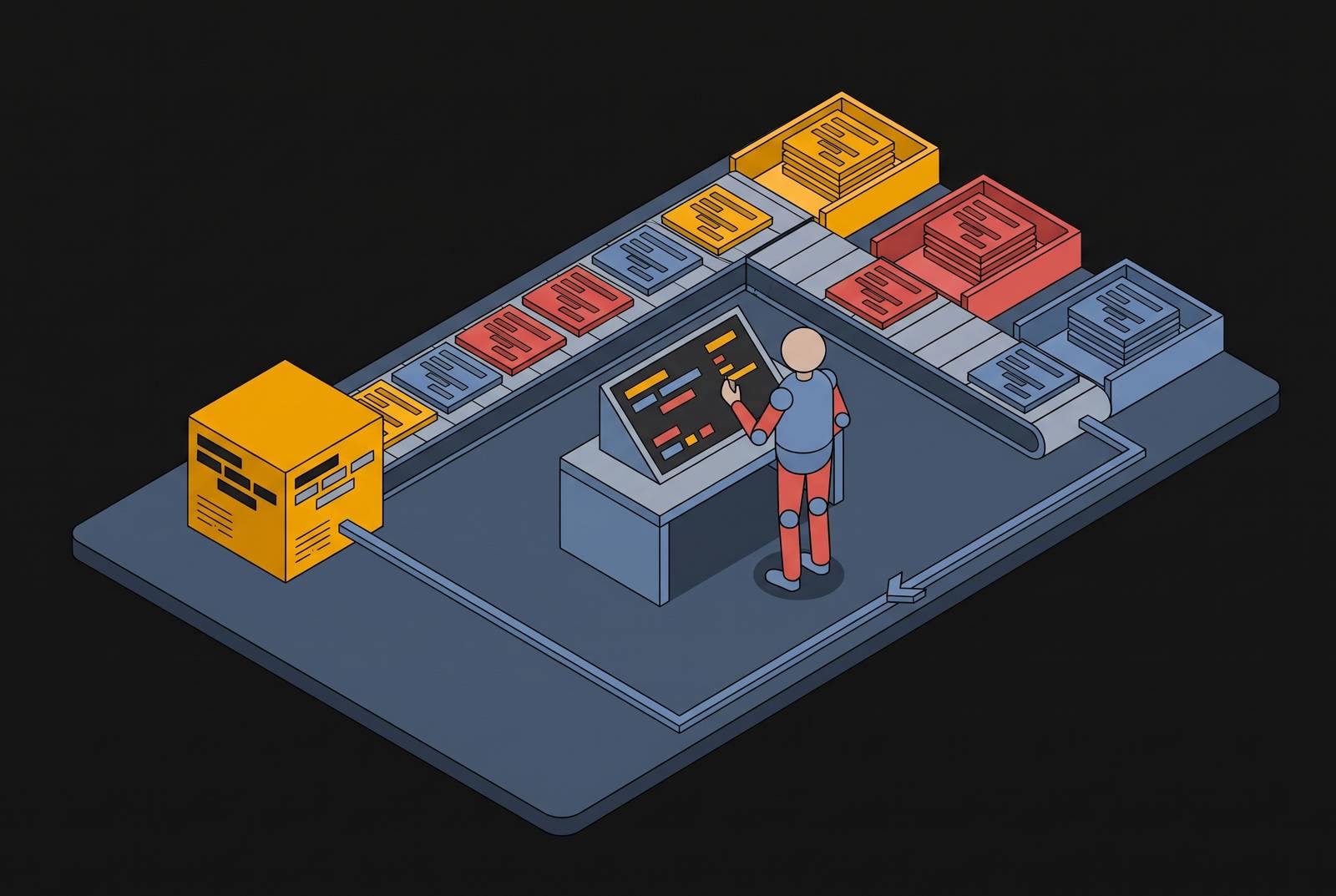
Human-in-the-loop review workflows for agent trace triage should flag bad outputs and route failures to the harness layer that caused them. Before teams ship agent changes, they should replay the proposed fixes against historical production traces and use confirmed failures as regression cases. Layer attribution, structured reviewer sign-off, and replay-gated promotion turn human judgment into actionable engineering evidence.
Why treating every flagged trace as a uniform inspection problem makes review unscalable
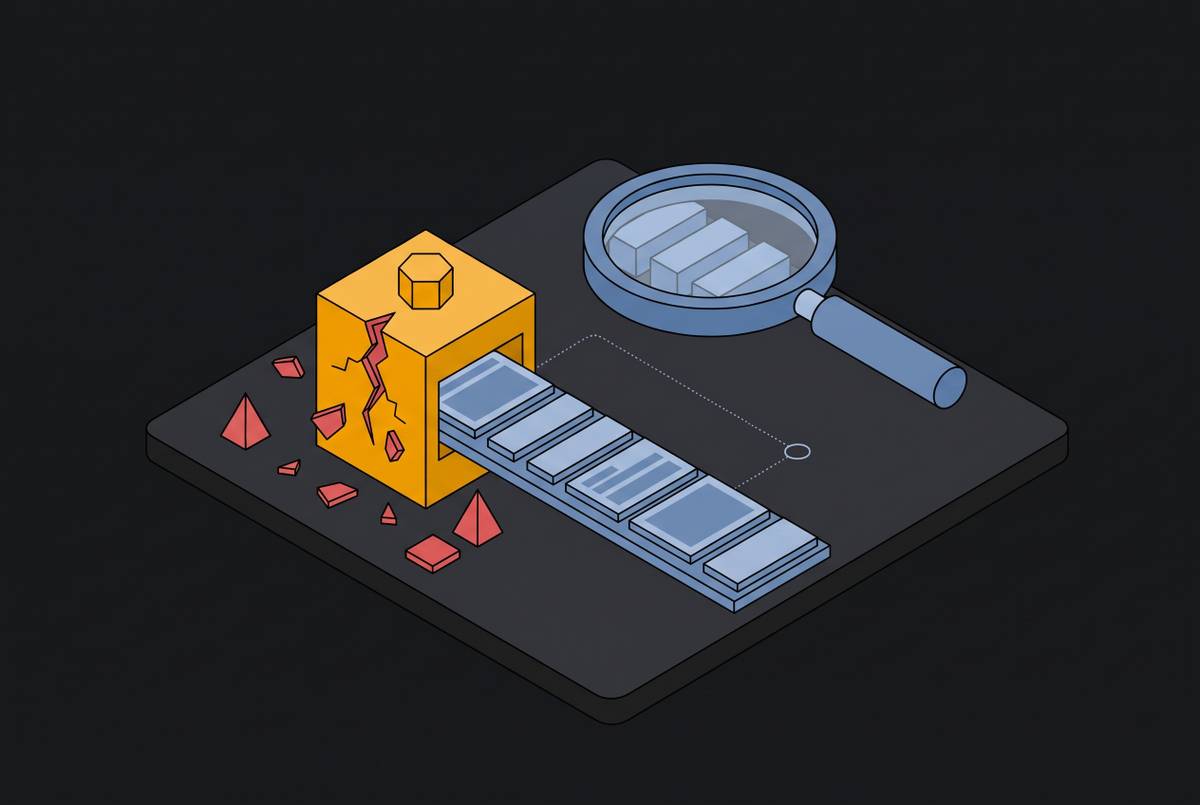
Undifferentiated trace queues give reviewers an output to judge without identifying the mechanism that produced it. Agent runs are multi-step and stochastic, so a failure can begin well before the final response. A wrong tool call or stale memory read can break every step that follows. The visible result may conceal the original error. A reviewer assigned only the result must either reconstruct that history or score an answer without understanding its cause.
Flat, chronological logs make that reconstruction difficult because sequence alone does not explain dependency. An ignored instruction, a tool returning the wrong schema, a workflow loop, and corrupted memory can all end in an unsatisfactory answer. They require different fixes. Harness-Bench (2026) found that 403 of 1,400 full-credit runs have at least one mid-run error. Output quality therefore cannot serve as a reliable proxy for the soundness of the path that produced it.
This attribution gap makes review expensive while weakening its engineering value. A block decision without an identified failure layer leaves engineers to repeat the investigation before they can propose a change. The remedy begins before the reviewer judges the case, by changing the information presented with the trace.
What layer attribution actually means and why it has to happen before traces reach reviewers
Layer attribution assigns a trace a typed failure hypothesis, namely prompt, tool, workflow, memory, or model. Prompt failures include instruction ambiguity, system-prompt non-adherence, and planner reasoning failures. Tool failures include schema drift, incorrect function usage, missing input dependencies, and data-schema mismatch. These categories distinguish intent from execution. A plan that misinterprets an instruction needs a different investigation from a correctly planned call made against an incompatible schema.
Workflow attribution concerns loops, abandoned exploration replayed as genuine steps, and incorrect step ordering. Memory attribution concerns stale context, retrieval misses, and context that crossed a policy boundary earlier in the run. Model attribution is the residual category after harness layers have been ruled out, and the rarest. It is not the default explanation for uncertainty. Each category identifies where evidence must support or disprove the suspected cause.
AgentTrails converts raw trajectories into structured provenance graphs, representing tool calls as computational actions and their inputs and outputs as data artifacts. That structure exposes dependencies obscured by chronological logs. Attribution still calls for a search through the evidence. AgentDebugX (2026) introduced DeepDebug, a multi-turn diagnostic approach using global trajectory understanding, structure-guided investigation, and cross-examination, because a single pass can settle prematurely on a plausible explanation.
Attribution must therefore precede entry into the review queue. Asking reviewers to derive it from raw logs expands their task from a bounded judgment to open-ended engineering work. The attribution is a hypothesis they can challenge. Even when the layer is right, someone must judge whether the recovery action is valid, so upstream diagnosis helps people make that judgment without making it for them.
How to structure reviewer queues around attributed failure layers rather than output scores
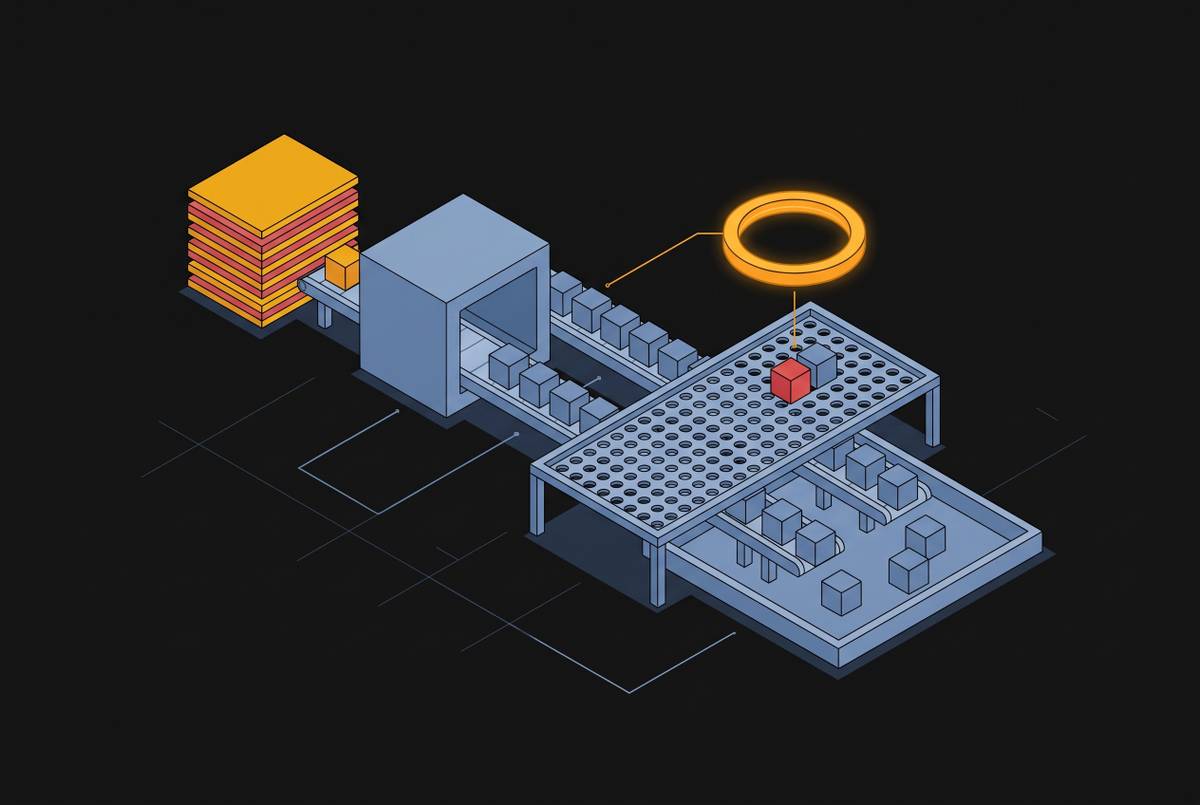
With attribution in place upstream, the queue changes from a ranked list of disappointing answers to a set of typed sub-queues. Each sub-queue presents the evidence needed for its category and routes it to someone qualified to decide. Specialization follows the suspected cause of failure. A prompt engineer can assess planning failures, a QA engineer can examine schema mismatches, and a domain expert or policy owner can judge context that crossed a compliance boundary.
The prompt queue should show the system prompt, the generated plan, and the step where instruction adherence broke. The tool queue should show the schema at call time, arguments, response, and any schema version mismatch. One concerns the relationship between prompt intent and agent interpretation, while the other concerns whether the harness supplied the right schema. Neither can be reduced to the final answer’s score.
Workflow reviewers need the step sequence, flagged loops or abandoned branches, and dependency graph. Memory reviewers need the injected context, when it was written, and the policy rule it may have crossed. For example, a financial-services agent could send account-closure traces that involve a policy boundary to a compliance reviewer while sending tool-schema failures to engineering. Queue ownership follows the attributed failure.
Every queue item should also include the implicated span or step, triggering evaluator score, active policy rule or rubric version, and available decisions, including approve, correct, block, and escalate. The reviewer receives enough context to accept or challenge the attribution and make a decision that the next owner can act on.
Designing escalation gates that tie promotion and blocking decisions to specific layers
Typed queues determine who reviews a case, while escalation gates determine what that review can authorize or prevent. A gate triggered only by low confidence identifies uncertainty without identifying the required intervention. Tool schema drift should trigger immediate engineering escalation because incompatible schemas can create silent failures that output scoring and end-user feedback do not reliably catch.
Workflow loops require a different treatment because a hard-cap violation is deterministic and testable. Repeating the same tool and arguments at the threshold should gate release in CI without asking a human to adjudicate the loop. A human should review the choice of fix. Prompt ambiguity, by contrast, needs prompt-owner review with the implicated planning step attached, and failure of the plan-vs.-execute evaluation should block release.
Irreversibility changes where the gate must sit. A read-only knowledge-base lookup can run automatically with sampled review, while an account-closure action needs human review before it runs. Memory and policy-boundary cases that are irreversible or regulated need named sign-off before promotion. Reversible customer-facing cases can use sampled HITL audit. The choice depends on whether a later correction can put the action right as well as whether the final response looks acceptable.
TraceCompiler (2026) reports refusing to compile a Spotify/Todoist intent because an irreversible side effect was under-determined. The same principle applies to escalation design. When an irreversible action has uncertain attribution, the gate should require human sign-off before promotion. Thresholds should also vary by layer and cohort, including user segment, topic class, and policy domain, because one confidence cutoff cannot appropriately govern both low-stakes lookups and regulated writes.
What reviewer sign-off decisions must capture to be reusable as engineering signal
A reusable sign-off records a judgment that engineering can reproduce and test. Its minimum contents are reviewer identity and timestamp, attributed layer and implicated span, active rubric or policy version, decision, and reason mapped to a failure category. It must also record whether the case entered the evaluation dataset. Free text alone is not enough for reuse. A block attached to typed attribution and an evidence-graded span identifies a failure that can become a fix candidate rather than an opinion requiring fresh interpretation.
The promote-to-dataset step makes this record useful beyond the current release. A confirmed failure at a specific layer should be promotable into the evaluation dataset as regression coverage. Otherwise, its recurrence demands another human investigation without benefiting from the earlier decision. The record must preserve the final action too. Reviewer identity, decision, rubric version, and final action make a judgment reproducible in a release-gate replay six months later.
When automated evaluators pass a trace that reviewers block, or reviewers disagree with each other, the response should be a rubric revision. Metric alignment makes that disagreement visible and actionable. Comparing annotations with automated scores exposes false positives and false negatives per metric, directing attention to the criterion that needs correction.
The practical test is whether review produces a rubric change, a harness fix candidate, or a new evaluation case. A decision that produces none of these is review theater. It consumes reviewer time without improving the next evaluation or release decision.
How trace-derived patterns across many reviewer decisions surface systemic harness failures
Structured decisions accumulate into evidence about the harness rather than remaining isolated judgments about answers. Grouping them by layer can reveal recurring tool errors, drifting prompt adherence, or memory staleness concentrated in a cohort. Individual traces cannot establish these patterns alone. When decisions that can be compared keep the failure category and implicated step, repeated symptoms in individual traces can point to the same engineering cause.
A cluster of tool-attributed blocks around one tool version points toward a schema fix. A cluster of prompt-attributed blocks at planning steps points toward a planner-prompt revision. These are distinct candidates for the engineering roadmap. An undifferentiated collection of low scores would not preserve that distinction, which explains why a large review backlog can remain expensive without becoming more informative. Attribution supplies the common structure needed to aggregate the judgments.
TraceCompiler extends this approach by mining clusters of noisy traces and compiling recurring behavior into mostly deterministic workflows. Once a pattern is compiled and validated, future instances can move from ongoing human review to deterministic handling. The gain comes from reusing validated structure while maintaining the standard for what counts as acceptable behavior.
The golden dataset should also be refreshed regularly with new confirmed failures from reviewed production traces. That refresh keeps evaluation tied to real usage patterns as they change. A suite centered on already-fixed failure modes may remain useful for regression testing while failing to represent the problems reviewers are encountering now.
How to test agent changes against production traces before deploying
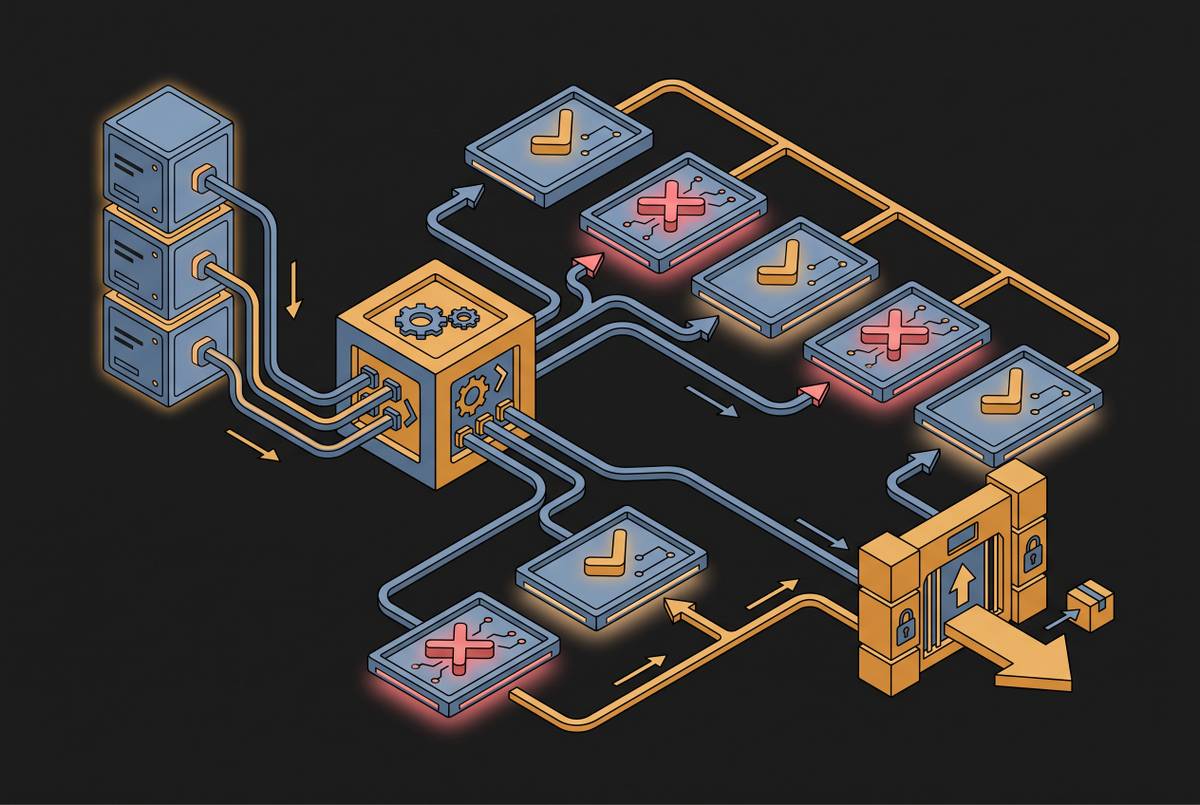
The complete workflow connects production trace capture, layer attribution, typed routing, structured reviewer sign-off, fix generation, replay validation, and promotion or rejection. The debugging sequence starts by finding the run and walking the span tree top-down to the first divergent step. The cause is then classified by layer. Replaying the same inputs against the same version establishes the reproduction before a fix is evaluated, and the confirmed case enters the evaluation set.
For prompt edits or changes that affect historical conversations, production-trace replay gives teams evidence they cannot get from synthetic benchmarks alone. The proposed change must be tested against the historical trace corpus. A harness change that fixes the reviewed trace but breaks five historical cases should not be promoted, even if the original reviewer approves its handling of the initial case.
Replay validation helps show whether a fix that looks right is ready for release. It tests the candidate against accumulated examples of actual agent behavior and the evaluation criteria preserved through review. High accuracy in identifying a failure does not imply equally valid recovery actions, so reviewer sign-off on the fix is a necessary gate.
This loop gives harness engineering the discipline of code review, with typed attribution, structured sign-off, replay-gated promotion, and dataset curation from confirmed failures. Human-in-the-loop triage is thus an engineering process, and its effectiveness depends on turning each judgment into evidence the next change must withstand.